My garden started on one side of the yard, while the chickens lived on the other. This seemed perfectly reasonable—right up until it became obvious that I had arranged the entire backyard backward.
The chickens were getting too much sun. The garden was not getting enough.
The hens had prime agricultural real estate and were using it mainly for scratching, dust bathing, and holding committee meetings. Meanwhile, the vegetables were trying to photosynthesize with the enthusiasm of employees working under a flickering office light.
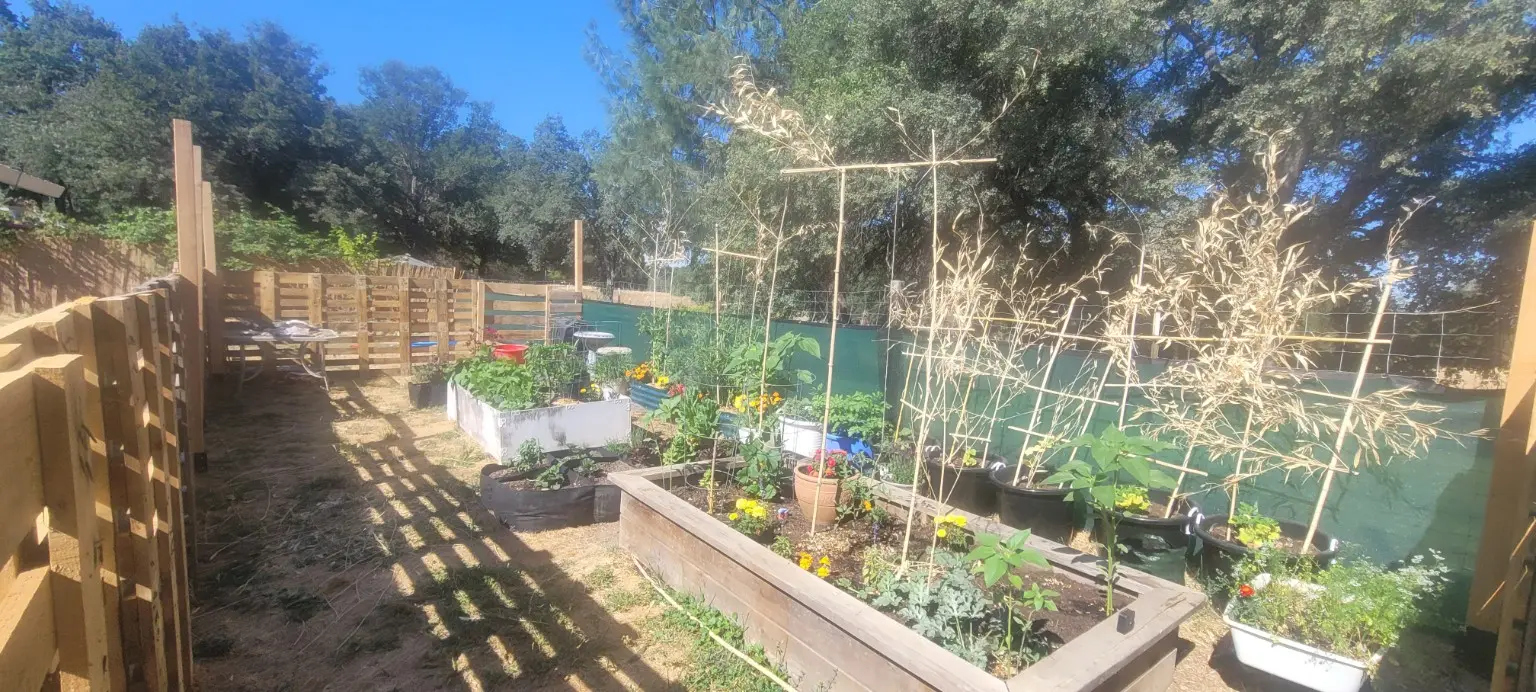
Sometimes the Garden Has to Move
Once I admitted the problem, the answer was obvious: switch them.
Unfortunately, “switch the garden and the chickens” sounds like a simple sentence only because it leaves out all the lifting, fencing, planning, moving, rebuilding, and chickens asking to speak with management.
But the temporary shuffle gave us something better than a quick fix. With the garden moving into the sunnier side and the chickens getting a more comfortable home, we could finally begin building both spaces properly: a permanent garden and a permanent chicken run.
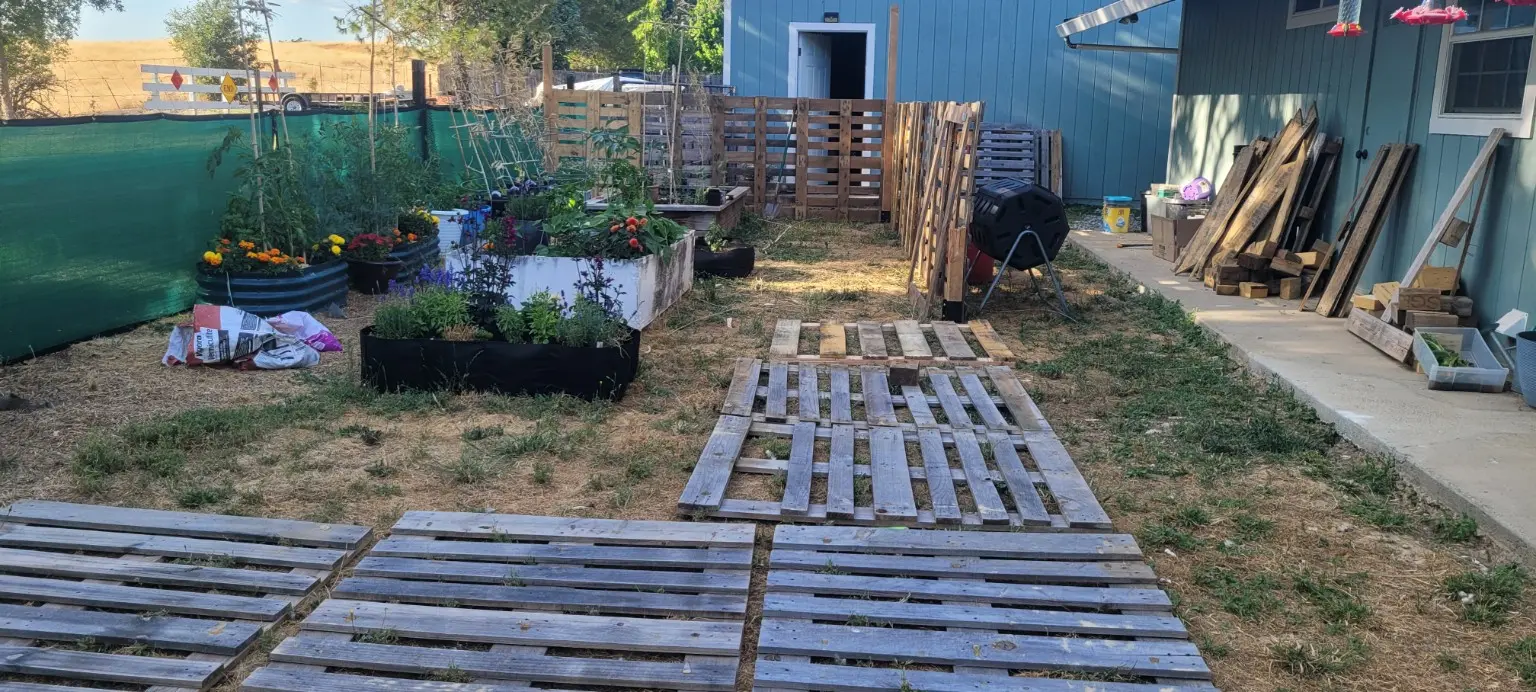
A Garden That Teaches as It Grows
This garden is not a magazine spread. It is a working experiment. Some plants thrive, some sulk, and some apparently signed a private agreement with the chickens.
The black buckets hold the pepper plants. Next year those buckets are moving inside the protected garden, because NKOTB discovered that pepper leaves apparently belong on the chicken salad bar. The plants survived, but the lesson has been filed under things I should have known the chickens would do.
But every season makes the next one better. I now know where the sun lands, which areas need improvement, and why “we can probably leave it there” is often the opening sentence of a much larger project.
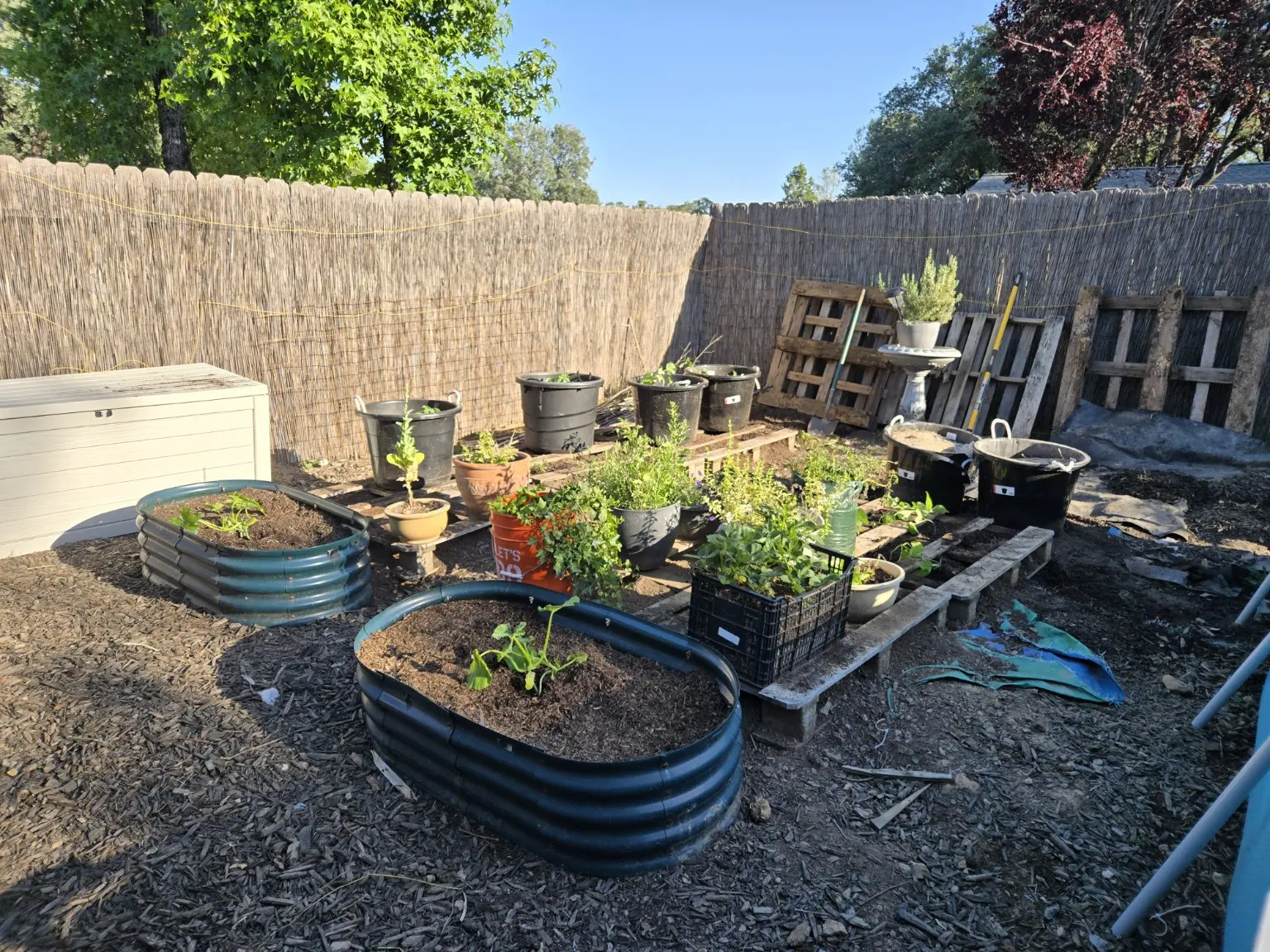
The Zucchini Situation
Then there was the zucchini.
Zucchini begins the season as an innocent little plant. A few weeks later, it is producing vegetables the size of small watercraft and leaving them on the kitchen counter like threats.
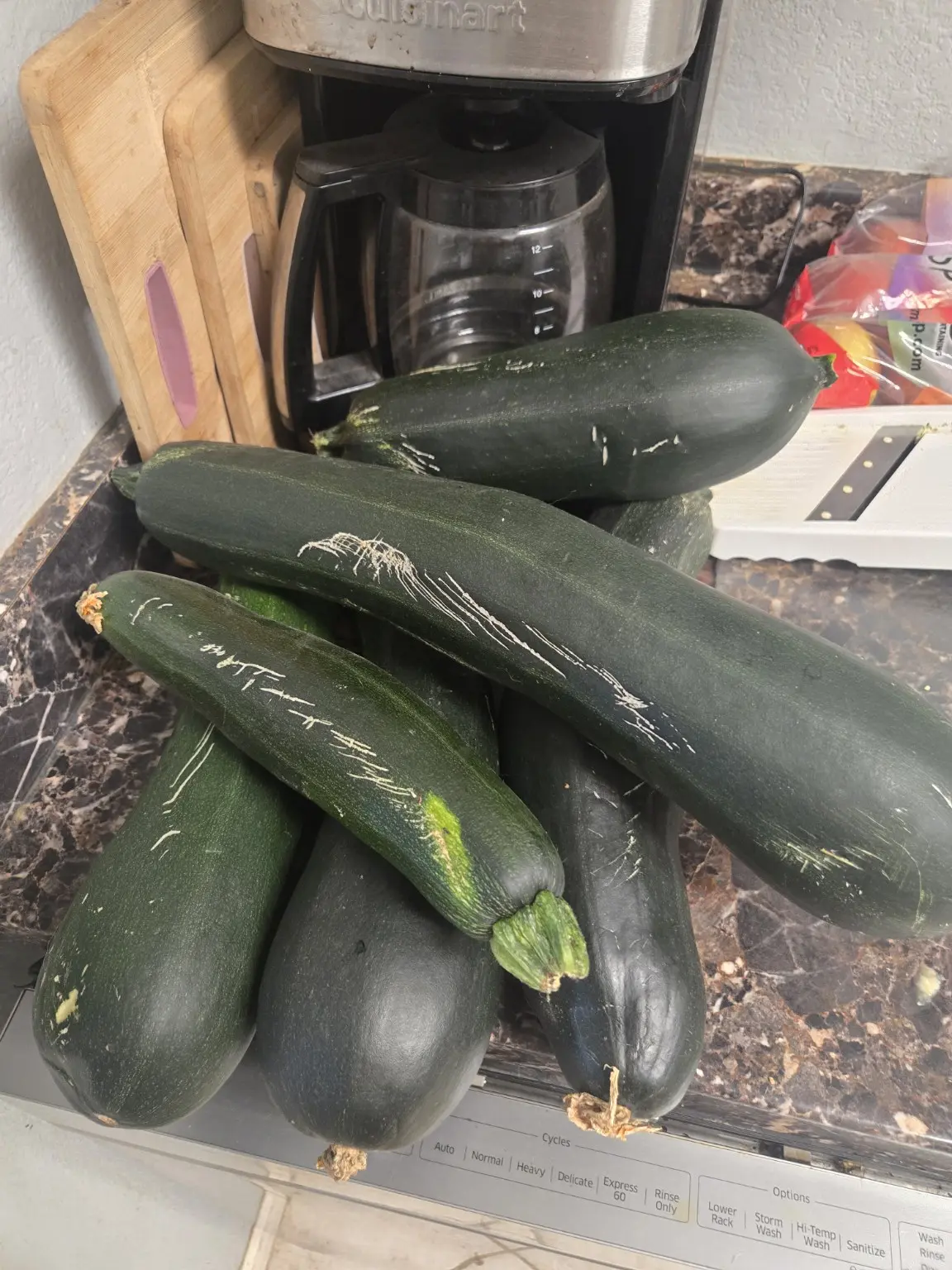
Rather than let all that food go to waste, we preserved it several ways. We spiralized zucchini for easy future meals, cubed it, and shredded it before freezing. Different cuts give us different options later, and the freezer makes it possible to enjoy the harvest after the plants have finished taking over the yard.
That is one of the best parts of growing food: even when the garden gets ridiculous, the ridiculousness can still become dinner.
What Comes Next
Now we can build with the future in mind instead of rearranging temporary pieces every season. The garden will have the sunlight it needs. The chickens will have shade and a permanent run. And I will have a layout based on actual experience rather than optimism and a tape measure.
Will everything go according to plan?
Absolutely not.
But that is why there will be another article. 🌱🤣