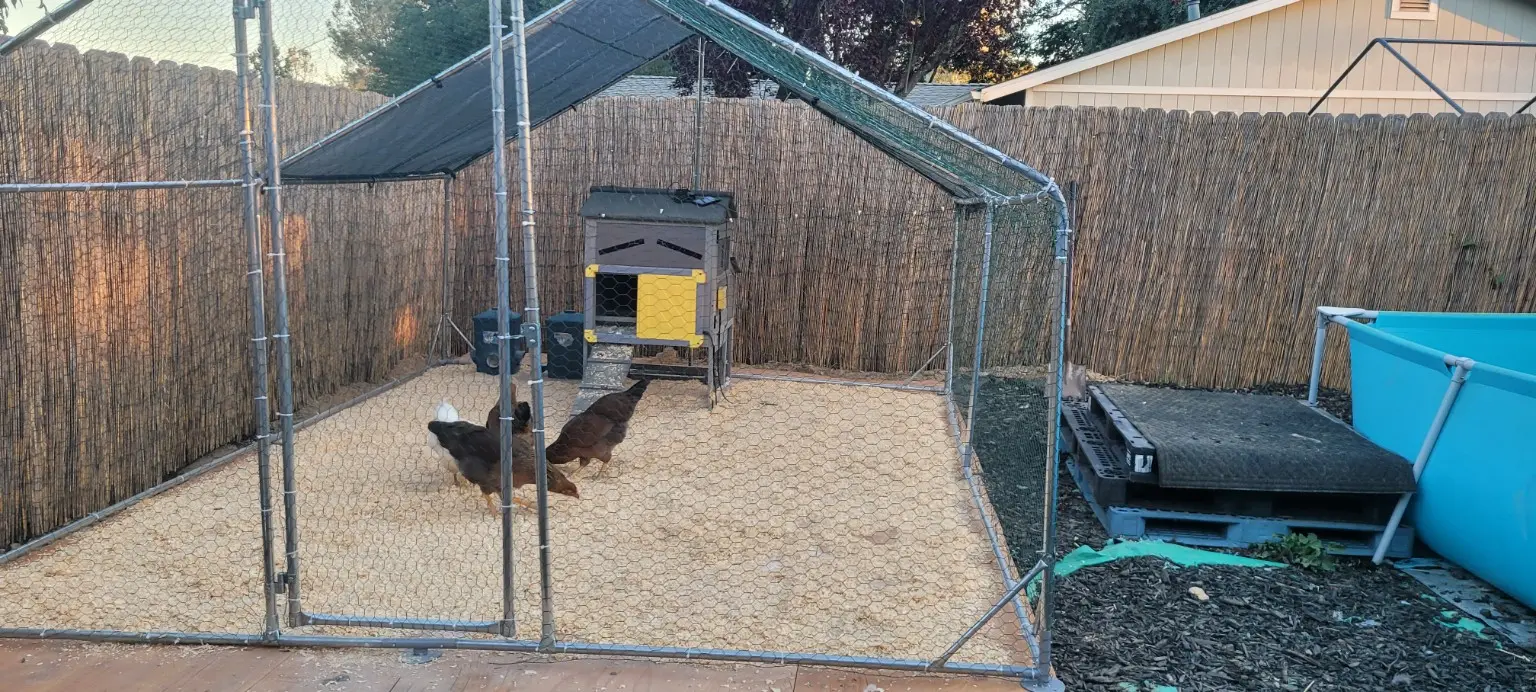
I began with one small chicken coop and four hens. It was cute, manageable, and completely adequate—until I added four more chickens.
The newcomers were two Ameraucanas and two Silver Laced Wyandottes. I called them the New Kids on the Block. After the formal introduction, they became NKOTB, because nobody has time to keep typing that when there is already a poultry expansion project underway.
The original coop had not magically grown when the flock doubled. It now had eight residents, limited floor space, and the general atmosphere of an airport terminal after several canceled flights.
The Coop Expansion Era
First came a larger cage around the little coop. Then came the plan for a permanent run enclosed with pallet fencing.
Pallets are useful, affordable, and apparently reproduce in the yard once a project begins. We started building the enclosure while the chickens supervised every decision without offering tools, labor, or constructive feedback.
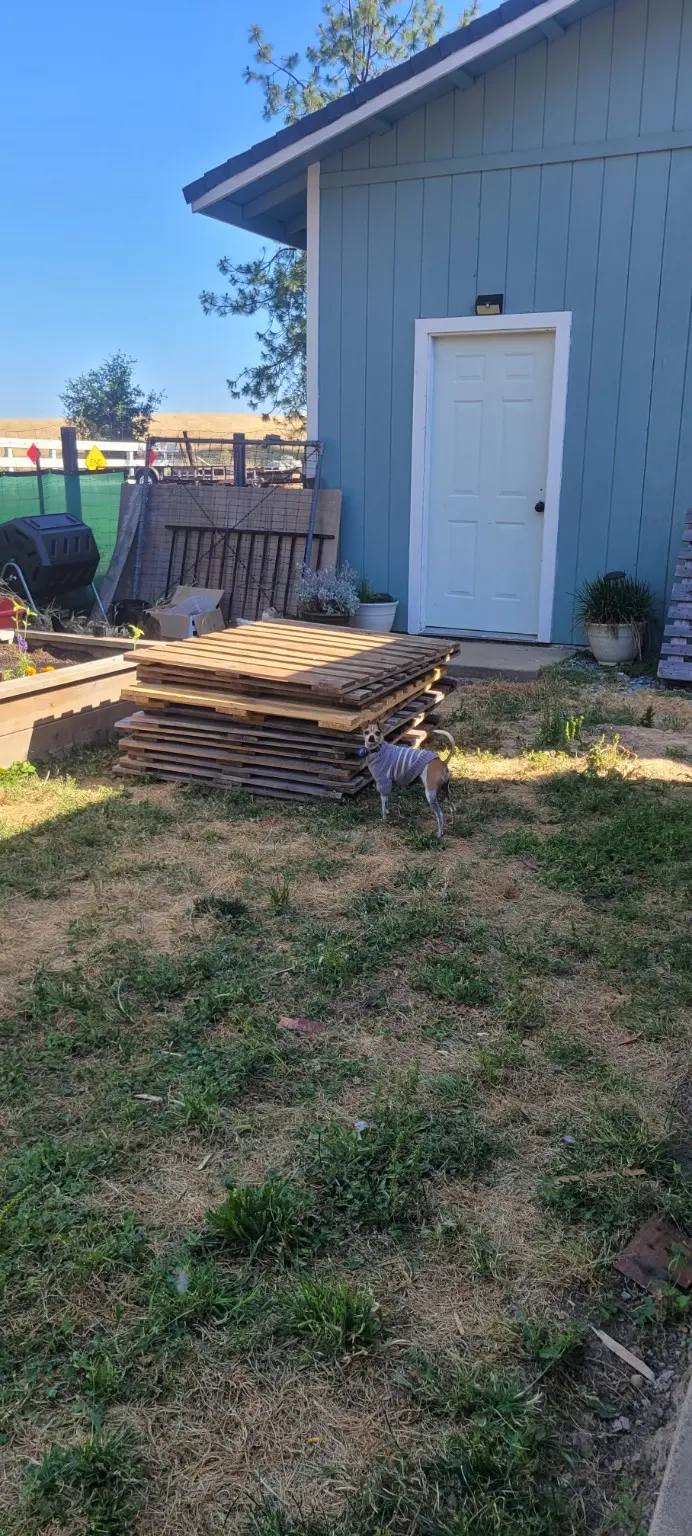
Then my mom and I had to move the enormous chicken cage from one side of the yard to the other.
The Traveling Chicken Cage
We rolled it over the poop, through the yard, past the pool, and into the unfinished end of the pallet enclosure.
There were two women attempting to steer a giant metal chicken cage across a backyard that had not been designed as a poultry transportation corridor. The enclosure was not finished. The ground was not especially cooperative. The cage had opinions.
It was like a comedy show no one could write because a writer would eventually say, “That is too ridiculous. Nobody will believe it.”
The chickens watched the entire production with the calm confidence of passengers who knew they would not be helping with their own luggage. 🤣
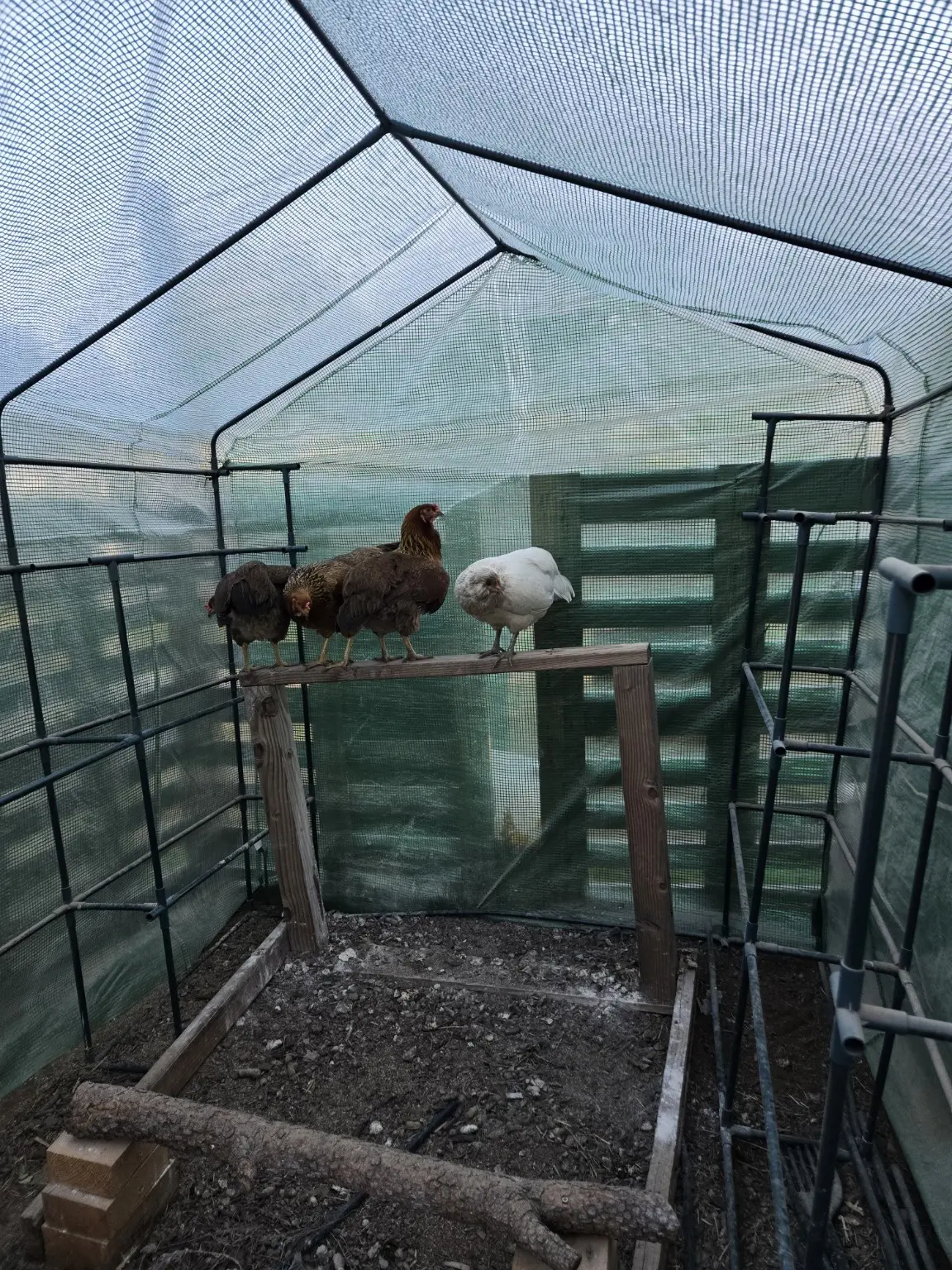
During the transition, the greenhouse became temporary chicken housing. It had been purchased for plants, but Porch Swing Farm buildings are apparently assigned by whichever residents create the most urgent committee meeting.
The Reasonable Shed Decision
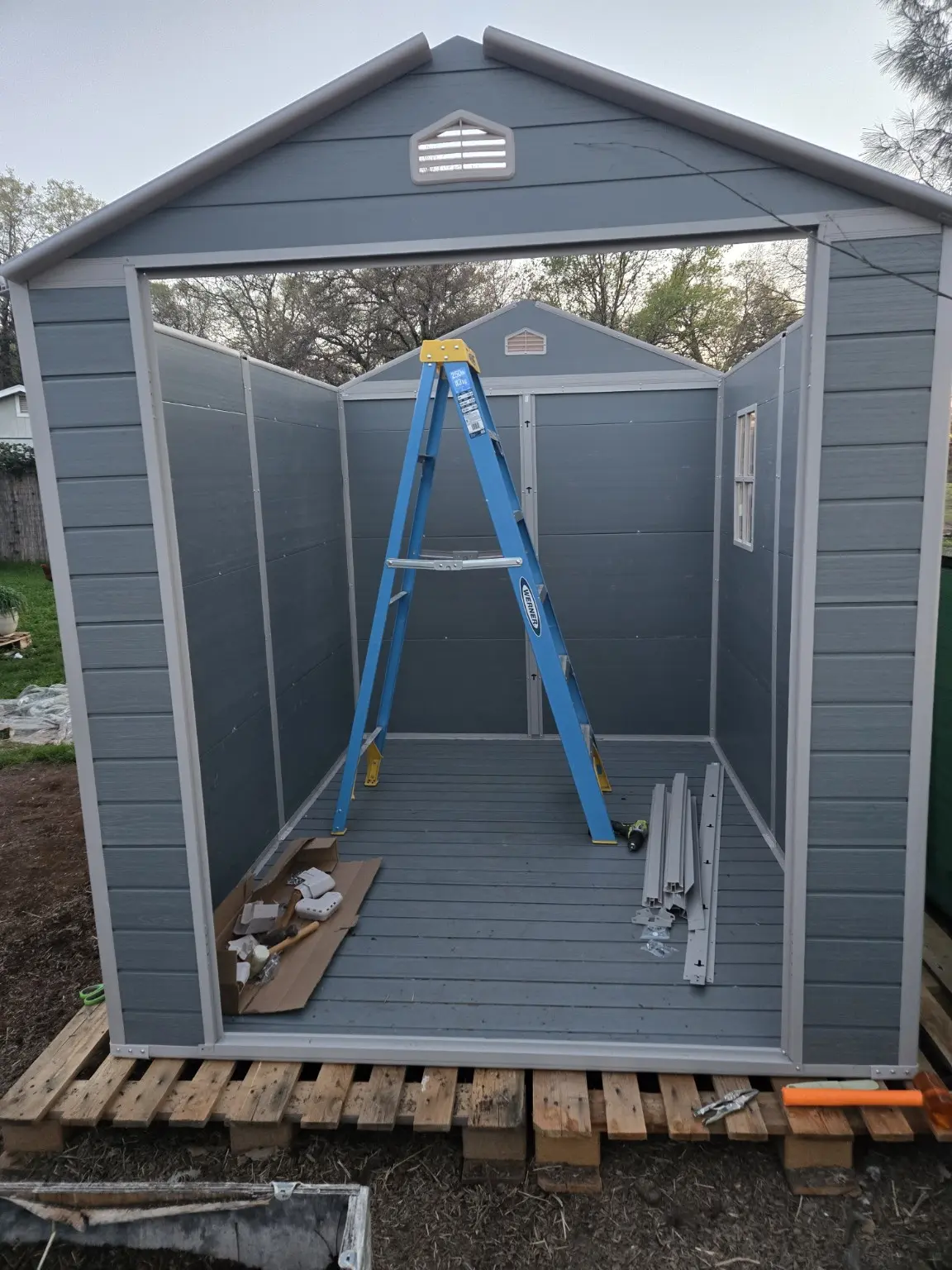
The large cage provided space, but it did not provide enough protection from the weather. I decided the eight hens needed a proper shed redesigned as a chicken coop.
I wanted a wooden shed, but the ones I found were expensive. Very expensive.
So I made what seemed like a financially responsible decision and bought a resin shed instead.
I had assembled IKEA furniture before. How difficult could a shed be?
Then it arrived with approximately 500 pieces and 25 pages of instructions.
Five hundred may be the technically accurate number. Emotionally, it contained at least 5,000 pieces—and several appeared to have been manufactured solely to damage my confidence.
The Poop Roost
The shed eventually became a real chicken coop, complete with a proper roost and a poop tray beneath it. The tray makes routine cleaning easier and catches an impressive nightly contribution from eight small birds.
I call the arrangement the poop roost, because elegant branding should not be limited to the honey jars.
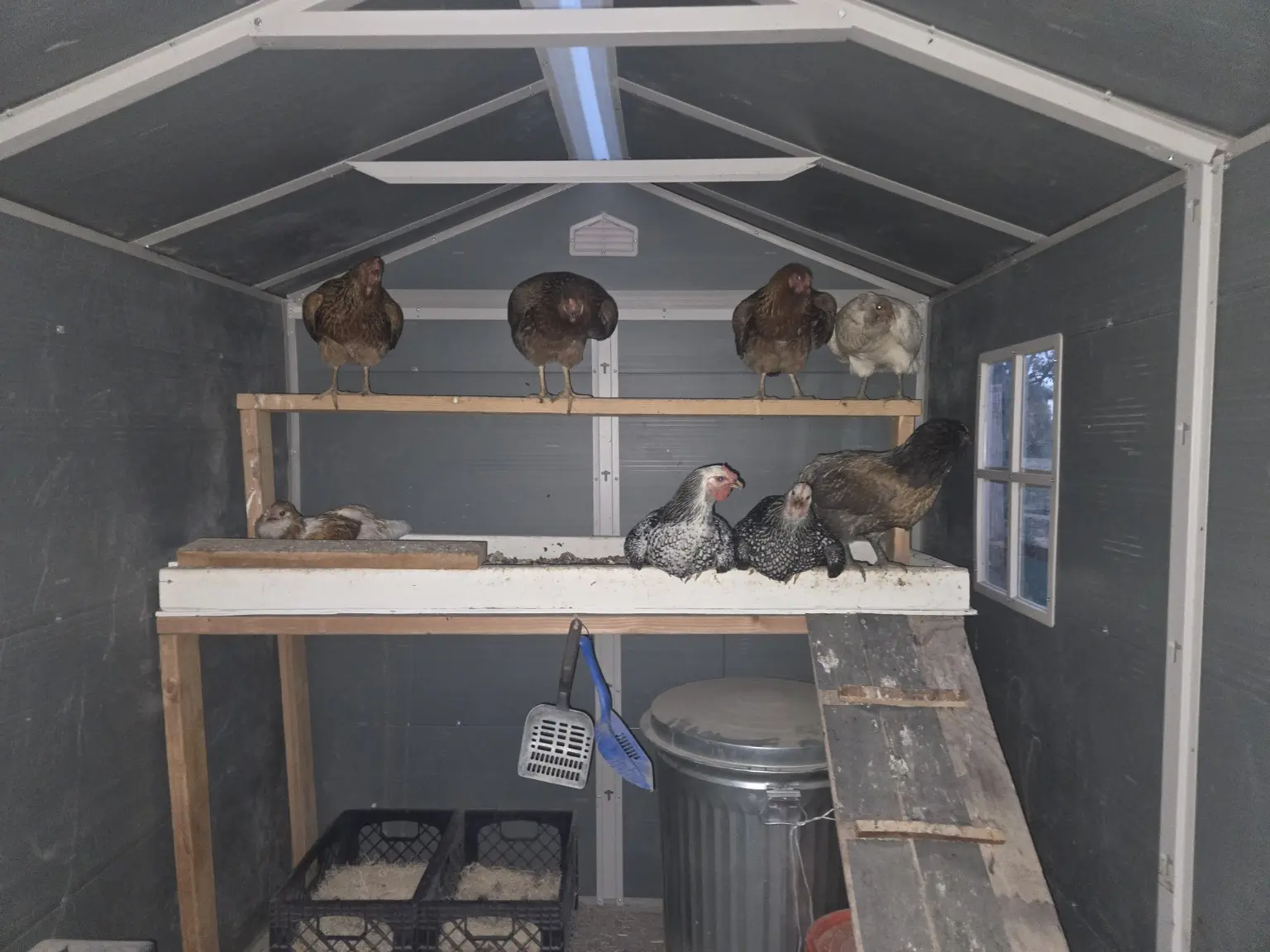
The hens now have a safer place to sleep, a permanent enclosure taking shape, and enough room for the original flock and NKOTB to negotiate their complicated social structure.
How a Small Coop Becomes a Construction Project
None of this was the original plan.
The original plan was chickens.
Somehow, “chickens” became a small coop, then a cage around the coop, then a pallet enclosure, then an across-the-yard cage relocation, and finally a shed with enough parts to qualify as an engineering exam.
But that is how Porch Swing Farm keeps growing: one reasonable little idea at a time, followed by several unreasonable amounts of work.
Would I do it again?
Of course.
I would simply complain more efficiently. 🐔🤣